He is risen… and so?
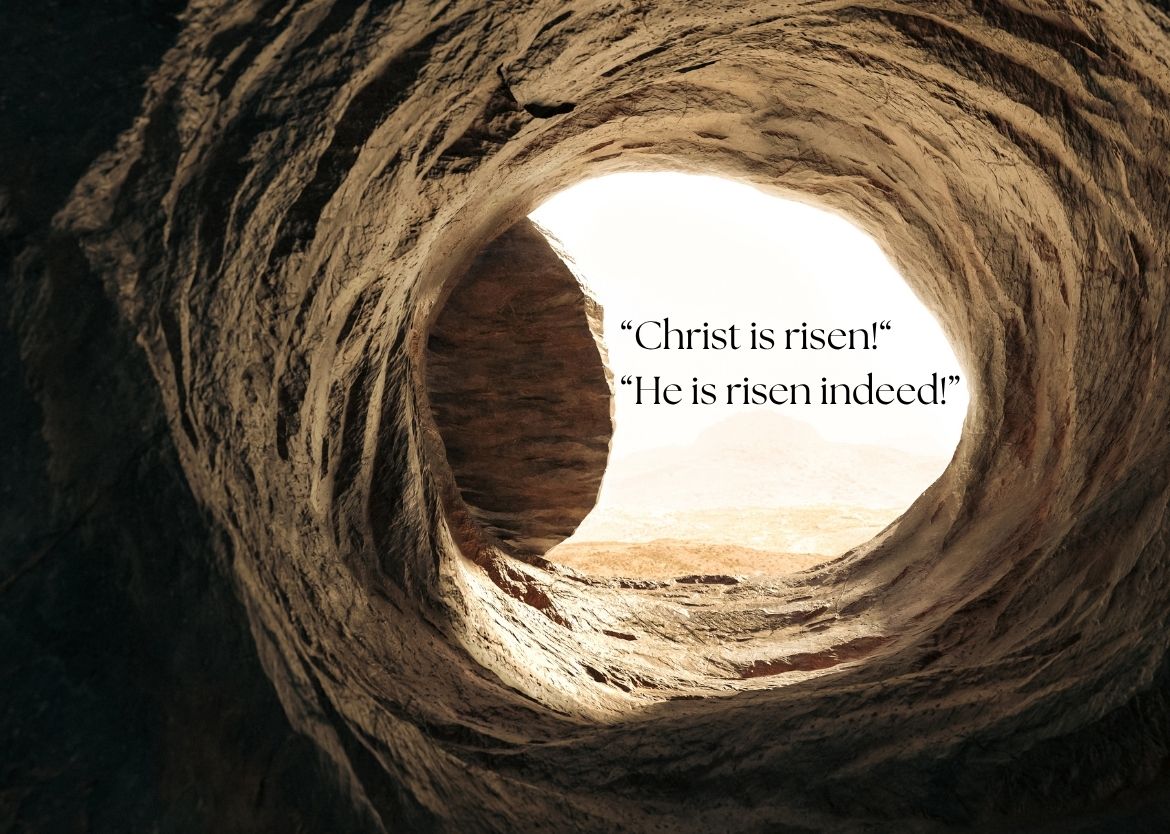
“Christ is risen!”
“He is risen indeed!”
Did that interchange echo around your church on Easter Sunday? Or on your social media feeds?
It’s always an encouragement, isn’t it? Hearing or reading people testify to an incredible (yet very credible) claim—one they are convinced and confident is true: “that he was raised on the third day in accordance with the Scriptures” (1 Cor 15:4).
And not just a true truth, a vital truth—because “if in Christ we have hope in this life only, we are of all people most to be pitied” (v. 19). And “if Christ has not been raised, [our] faith is futile” (v. 17).
The resurrection has magnificent implications. For one thing, it tells us something about Jesus that’s at the very heart of the gospel: his resurrection declares him to be “the Son of God in power” (Rom 1:4, cf. Acts 2:36).
But it tells us something about us too. “We shall not all sleep, but we shall all be changed, in a moment, in the twinkling of an eye, at the last trumpet. For the trumpet will sound, and the dead will be raised imperishable, and we shall be changed” (1 Cor 15:51-52). That is, by resurrection our bodies will become suitable for the eternity we have ahead of us.
The resurrection shows us that there’s a future eternity which is worth investing in. “If the dead are not raised, ‘Let us eat and drink, for tomorrow we die’” (v. 32). But if the dead are in fact raised… well, suddenly our lives are lived under a very different canopy than just “the sun” (Ecc 1:14). Since Jesus has been raised, we—as “those who belong to Christ” (v. 23)—can be sure we will be raised too. And that’s a life-changing truth.
Or it should be.
Paul is concerned, however, that some of his readers are not believing in the resurrection, and not living as if it’s their future. This is leading them to immorality, because if you think this life is all there is, you might as well live in dissipation (v. 32). But that’s not the way to live. “Wake up from your drunken stupor, as is right,” Paul says, “and do not go on sinning” (v. 34).
They need to wake up. Tragically, they are missing something. They are effectively living like the rest of the world who live with “no knowledge of God” (v. 34).
But if they wake up from their stupor, open their eyes to see the resurrection reality, they will discover something very different to live for—something better and imperishable, rather than corrupt and selfishly hedonistic.
On awakening to this reality, they can instead live as those headed towards eternal “glory” (vv. 40-43). They can invest in the life to come. Which is the idea with which Paul ends his resurrection chapter:
“Therefore, my beloved brothers, be steadfast, immovable, always abounding in the work of the Lord, knowing that in the Lord your labour is not in vain.” (v. 58)
There are people everywhere who are living (like some of the Corinthians) in ignorance of God—in particular they are ignorant of his power to raise the dead to life, a power made very evident in Jesus. But there is now a gospel word that can overcome that ignorance and change people. It brings them to faith and readies them for an eternal future. And the sharing of that gospel hope is “the work of the Lord” (cf. 1 Cor 16:10) that we should “abound in”. We do so knowing that such work is “not in vain”, because it will bear fruit that flows into eternity.
When my brothers and sisters in Christ remind me that “Christ is risen”, they are not only asserting a historical truth, they are helping to shake me out of any sleepy stupor that has crept in as I’ve listened too much to the world, and not enough to God’s word.
“Don’t be fooled, Ian,” they’re saying. “There’s something more than this life to live for. Join me in getting on with the work of sharing the gospel—the word of hope that prepares people for the eternal reality that Jesus’ resurrection paves the way for.”
“Christ is risen!”
“He is risen indeed!”
It’s something we could probably say to each other more than one day a year.